Tournament Endgame Technique: Converting Against an Unrated Opponent (1800 vs unrated)

tournament endgame technique

Introduction

For the 5th and final round of the Eastside Open, I played an unrated opponent—always a challenge since today’s unrated USCF players can have decades of online experience. After another Alapin Sicilian (my 4th encounter in this tournament!), I made familiar early mistakes like 8…Nc6 instead of 8…Qc7, putting pressure on weak pawns.

My opponent launched a wild kingside attack with h4-g5-h5, and while I found my first real tactic of the tournament with 22…Bxg3!, I also made unnecessary moves like 29…b5?! when more direct play was available. The critical phase came in the endgame, where tournament endgame technique proved decisive. True to form, new players have real struggles in endings—it’s usually where they’re weakest. I converted my material advantage by activating my king (starting with 41…Kf8), winning pawns systematically, and grinding down the position over 60 moves to reach a winning queen and rook endgame.


Tournament Context and Opening

For the 5th and final round I got to play an unrated player. This is always a challenge, and as I note: that’s always deceiving though. Years ago, unrated players had little experience in classical chess. Today, an unrated USCF player can have decades of experience playing online. The moral of the story? Never underestimate your opponent.

I started the game as Black and got into 1.e4 c5 2.c3—another c3 Sicilian! How many times in this tournament will I see the Alapin?! This was my third encounter with this opening, and this game is really no exception to my previous struggles.

We had a standard opening through 2…Nf6 3.e5 Nd5 4.d4 cxd4 5.Nf3 e6 6.cxd4 d6 7.Nc3, and then I played 7…Nxc3 8.bxc3.

The Familiar Mistake: 8…Nc6

I made the mistake of playing 8…Nc6 instead of the more principled 8…Qc7.

These are little nuanced moves—I should always try and put pressure on weak pawns. And I didn’t do that. So I just kind of blindly played 8…Nc6, not thinking, and he pinned it with 9.Bb5 Bd7.

According to my notes, better was 8…Qc7 9.Bd2 Nd7, or even 8…Nd7!, which leads to more comfortable positions for Black.

Early Middlegame Development

The game progressed pretty naturally: 10.exd6 Qa5?! 11.Qb3 Bxd6 12.O-O O-O 13.Be3 Qc7.

He found a lot of strong moves. I have to say he was pretty solid. I played 10…Qa5 check, trying to capture his B5 bishop, and he just played quickly 11.Qb3, which was totally fine. He was totally equal here—there was no real advantage.

After 13…Qc7 on move 13, this was sort of OK. I should have played something like 13…Rac8 to keep the knight and bishop out of more active squares, but I didn’t. So I just kind of dropped the queen back to c7, and the idea was I wanted to play …Na5 and threaten to get into c4.

Finding the Key Idea: 14…Na5!

He was quick to play 14.Rac1, defending the backward c-pawn. But then I finally found a move I thought was pretty solid: 14…Na5!

The idea of dropping into c4—that’s what chess is about, right? It’s just square control. And the more pressure I put on this guy, the easier time I’m probably going to have.

After 15.Qa4 Bxb5 16.Qxb5 a6 17.Qd3 Nc4, I got my knight into c4. I should have played Nc4 immediately, but I wanted to get an in-between move, so I played 16…a6. A little in-between move—he played back to 17.Qd3, and then I still went to 17…Nc4 with the knight. So the game is equal at that point.

The Wild Attack: h4-g5-h5

This looks rather dry with exact play, but look, he’s unrated. There’s a reason he’s unrated, right? I want to put pressure on him.

So he plays this very strange 18.h4 idea to try to attack, and that’s kind of where things start coming off the rails a little bit.

I played 18…Rac8 just to get more pressure on the c-file. Apparently the better move was 18…h6, which is very preventative. I don’t quite understand why that’s a good move, but this is what the engine suggests.

Anyway, I played 18…Rac8, which was a normal-looking move, and he’s just going all in. He played 19.Ng5 g6, and he really wants to mate me. I got to play 19…g6 of course to defend, and that was natural.

And he still pushes with 20.h5! He’s just like a maniac the way he’s playing.

The Critical Tactical Sequence

Trying to get all my pieces involved, 20…Rfd8 finally happened. The game is still equal. He took 21.hxg6 hxg6—I captured back with the h-pawn, and the game is just dead equal.

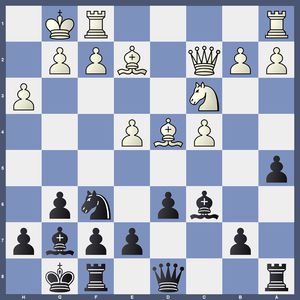
Here he plays sort of strangely 22.g3??, which was a blunder. He really should have played 22.Nxe6!, an incredibly difficult move that keeps the position completely equal.

Instead, after 22.g3, I played 22…Bxg3!—my first tactic of the tournament!

Then he responded with 23.Nxe6!, the best reply. I continued 23…Bh2+?!, which is still good but not as clean as the alternative 23…fxe6 line, which my notes show leads to winning material.

After 24.Kg2 Qc6+ 25.Kxh2 Qxe6, the position had simplified, but I was beginning to get the better of it.

Building the Attack

He tried 26.Bh6?!, which was a mistake. He needed to play something like 26.Bf4 and put pressure.

Then I found a very strong move: 26…Rd5! (My notes also mention 26…Ne5 was strong, but 26…Rd5 is very strong too, elevating the rook and preparing Rh5. He’s in trouble here—I’m winning by almost the equivalent of a piece.)

After 27.Bf4 Kg7, I played 27…Kg7, which wasn’t really recommended. I should have played immediately 27…Rh5+, but I just wanted to be very particular about my moves, making sure I get all my pieces active.

A Critical Inaccuracy: 29…b5?!

The game continued 28.Rce1 Qf6, and I was trying to hop onto h4 to check him. Really interesting things going on.

Then after 29.Re4, I played 29…b5?!, which is really not necessary. It was just sort of an unnecessary move. I should have just played 29…Rh5+ check again, creating pressure. It’s unnecessary support for a knight that shouldn’t be there very long anyway.

I spent more time on this position than any other. I was trying to make Rh5 or Rh8 work, but I didn’t want the knight to hang. So I decided to solidify the knight with …b5, but this was a mistake in tournament endgame technique—I was creating unnecessary complications instead of playing directly.

The Kingside Pressure

After 30.Qg3 Rh8+ 31.Kg2 Rdh5, this looks scary, but I can’t find the mate. It’s not clear, and it isn’t mate. That’s why I got to be very thoughtful about this.

He then makes the move 32.Rg1?! and doubles up to put pressure. But he should have played 32.Rfe1.

Then I finally start to power in here: 32…Qf5, and after 33.f3 Rh3?!, I play not really knowing if that’s best or not, just thinking it’s best. Again, according to my notes, 33…Rh2+ is probably a better move.

After 34.Qg4 Qxg4+ 35.fxg4 Rxc3, I finally understood that there are pawns to be won! This is where proper tournament endgame technique becomes crucial.

The Endgame: Where Technique Matters

Now it’s the ending, and true to form, new players have real struggles in the ending. It’s usually where they’re the weakest. And to be fair, it’s everyone’s weakness in most cases. So that’s kind of where things broke down for him.

After 36.Rge1, I had won material and needed to convert with good tournament endgame technique.

The game continued 36…Rd8?! (I should have played more actively with 36…Rh4), 37.g5 Rc2+ 38.R1e2 Rxe2+ 39.Rxe2 Rxd4, and now I was up material with excellent winning chances.

King Activity and Conversion

Even though he doubled up rooks, this is where I just started to grind him down. I got my king active—very slow, calm chess. Just continue to apply the pressure.

After 40.Kf3 a5 41.Rc2 Kf8, the king begins its march to the center. This is fundamental tournament endgame technique: activate your king in the endgame.

The conversion continued methodically: 42.Rc3 Ke7 43.Rb3 b4 44.Kg3 Ke6 45.Bc7 Kf5, and now I’m up multiple pawns with connected passers.

He took a pawn with 46.Rf3+ Kxg5 47.Rxf7, but by this point, I had 47…Rd3+ 48.Kf2 a4, and my connected passed pawns were rolling.

The Final Phase

The endgame continued with excellent tournament endgame technique: 49.Rf4 Rc3 50.Re4 b3 51.axb3 axb3 52.Bf4+ Kf5 53.Rd4 b2 54.Bc7 b1=Q, and I had promoted my first pawn.

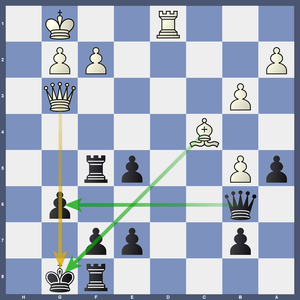
After 55.Rf4+ Kg5 56.Kg2 Qb7+, I was completely winning. The game finished 57.Kh2 Qxc7 58.Kg2 Qxf4 59.Kg1 Qd2 60.Kh1 Rc1#.

To his credit, he played to the very end, and I made it mate. It wasn’t really until around move 57 that he was completely lost—he hung his bishop and walked into the pin after Qxc7.

Key Lessons on Tournament Endgame Technique

Activate your king in the endgame. My plan starting with 41…Kf8-Ke7-Ke6-Kf5 was textbook tournament endgame technique. The king becomes a powerful piece in the endgame, and centralizing it is often the key to converting advantages.

Don’t get distracted by mating attacks when material is available. This was one of the most instructional games of the tournament for me. I learned not to focus too much on a mating attack when winning pawns can be just as important. I missed several ways to win pawns as I was blinded by trying to mate the enemy king.

Avoid unnecessary moves in critical positions. My 29…b5?! was completely unnecessary—I should have played 29…Rh5+ directly. In tournament endgame technique, every move should have a clear purpose. Don’t make moves just to “improve” your position if direct action is available.

Convert methodically, not hastily. After winning material on move 35, I took 25 more moves to convert. This is normal and correct tournament endgame technique—accuracy matters more than speed when you’re winning.

Know your basic endgame patterns. The queen and rook versus lone king ending is elementary, but you need to know how to execute it cleanly. Practice these basic patterns so they become automatic.

What I Learned About Time Management

Megan Lee had a good point when she was talking about her own games. She said that it’s important to use your time to plan the strategy of what you’re going to do. And I don’t do that enough.

I spend too much time walking around the board, semi-socializing, and while there’s nothing wrong with that necessarily, I should try to focus on spending more time at the board working these problems out. That way, when I see a move, it isn’t completely new or unheard of.

Getting up and walking around is OK—I just can’t do it as much as I do. That’s my goal for the next tournament.

Training Your Tournament Endgame Technique

To improve your endgame conversion skills like those needed in this game:

Study basic endgames – Queen vs. rook, rook vs. pawns, king and pawn endings
Practice king activity – The king is a powerful piece in the endgame
Learn pawn breakthrough techniques – Connected passed pawns are usually winning
Study practical endgames – Positions with material imbalances like this game
Play longer time controls – Endgame technique develops through practice in real games

For comprehensive endgame training, visit Chess.com’s endgame lessons, which features detailed instruction on the fundamental endings every tournament player must know.

For honest game analysis and creating improvement plans, Better Chess offers excellent guidance at https://betterchess.net/chess-development-plan/, emphasizing systematic study and practical improvement.

Final Reflections

This game showed both my strengths and weaknesses. I struggled again in the Alapin Sicilian opening (my 4th encounter in 5 rounds!), made the familiar mistake of 8…Nc6 instead of 8…Qc7, and played an unnecessary 29…b5?! when direct play was called for.

However, my tournament endgame technique was solid. I correctly identified that winning pawns was more important than chasing a non-existent mate, activated my king methodically, and converted my material advantage over 25 moves.

The lesson is clear: even if you struggle in the opening and middlegame, good tournament endgame technique can save the day. Against lower-rated opponents especially, patience and methodical conversion often prove decisive.


Game Summary

Opening: Sicilian Defense, Alapin Variation (ECO B22)
Tournament: Eastside Open, Round 5
My Color: Black (Harwood, 1861)
Opponent: Rendond Aguirre, Bryan (Unrated)
Result: 0-1 (Black won)

My Mistakes:

  • 8…Nc6 (should be 8…Qc7)
  • 10…Qa5?! (inaccurate)
  • 23…Bh2+?! (23…fxe6 cleaner)
  • 29…b5?! (unnecessary – should play 29…Rh5+)

My Strong Moves:

  • 14…Na5! (key idea for c4)
  • 22…Bxg3! (first tactic of tournament)
  • 26…Rd5 (strong rook lift)
  • 41…Kf8 (beginning king march)

Opponent’s Errors: 22.g3?? (allows Bxg3), multiple endgame mistakes

Move Count: 60 moves


Remember: Tournament endgame technique is about patience, king activity, and methodical conversion. Don’t chase phantom mates when real material is available, and always activate your king in the endgame.