

Round two of the 2025 WA Winter Classic handed me one of those pairings that makes your stomach do a little flip when you see the wall chart. There I was, rated 1857, staring across the board at a 2159-rated opponent. That is a 300-point rating gap, which in chess terms means I was supposed to be his lunch.
Spoiler alert: I was not.
What followed was a tense, theoretically rich battle in my beloved Accelerated Dragon that taught me more about practical chess than a dozen tactics puzzles ever could. We drew after 50 moves, and while my opponent seemed less than thrilled about splitting the point with someone rated 300 points below him, I walked away with something far more valuable than half a point. I gained a deeper understanding of what it means to play the Accelerated Dragon against a strong opponent and, perhaps more importantly, what it means to hold your nerve when the rating gap screams that you should not be competitive.
Let me take you through this game and share the lessons that every amateur player working toward master-level chess should understand.
The Accelerated Dragon: My Opening of Choice for Decades
Before we dive into the game itself, let me explain why I chose the Accelerated Dragon and why it has been a cornerstone of my repertoire for decades. The Accelerated Dragon is a variation of the Sicilian Defense that begins with the moves 1.e4 c5 2.Nf3 Nc6 3.d4 cxd4 4.Nxd4 g6. Unlike the regular Dragon where Black plays d6 early, the Accelerated Dragon delays this move, allowing Black to potentially play d5 in one shot rather than two.
The beauty of the Accelerated Dragon lies in its flexibility. You avoid the Yugoslav Attack, which is one of the most dangerous attacking systems White can throw at you in the regular Dragon. Instead, you get positions that are sharp but manageable, dynamic but not suicidal. For a player rated around 1900 who is climbing toward 2200, the Accelerated Dragon offers the perfect balance of fighting chances and theoretical soundness.
When I sat down against my 2159-rated opponent, I knew exactly what I wanted to play. The only question was whether he would know how to handle it.
Setting Up the Accelerated Dragon Position
The game began with the standard Accelerated Dragon move order:
1.e4 c5 2.Nf3 Nc6 3.d4 cxd4 4.Nxd4 g6 5.Nc3 Bg7
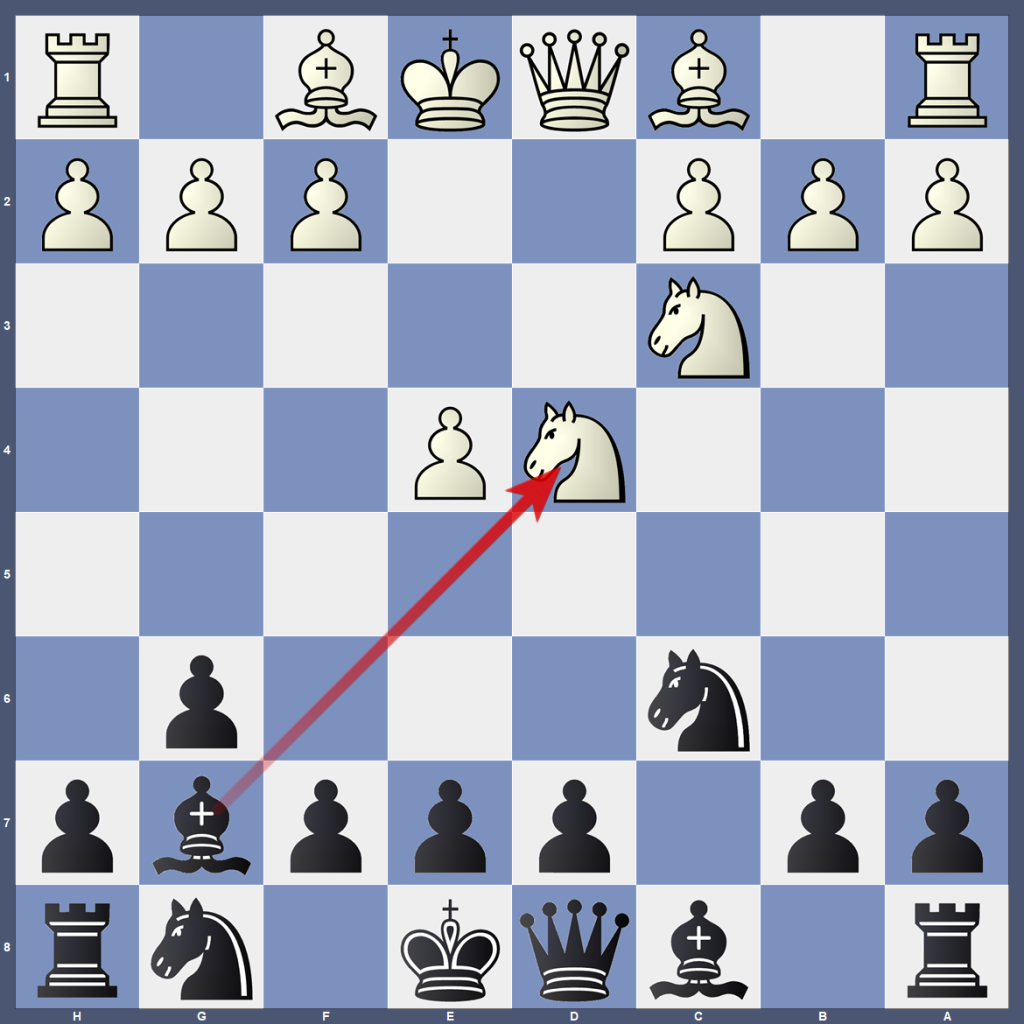
This is the tabiya position for the Accelerated Dragon. My dark-squared bishop is fianchettoed on g7, pointing down the long diagonal like a sniper rifle aimed at White’s queenside. The key question now is how White responds. Will he play the Maroczy Bind with c4? Will he try to play Yugoslav-style with Be3, f3, and Qd2?
My opponent chose the latter approach:
6.Be3 Nf6 7.f3 O-O 8.Qd2
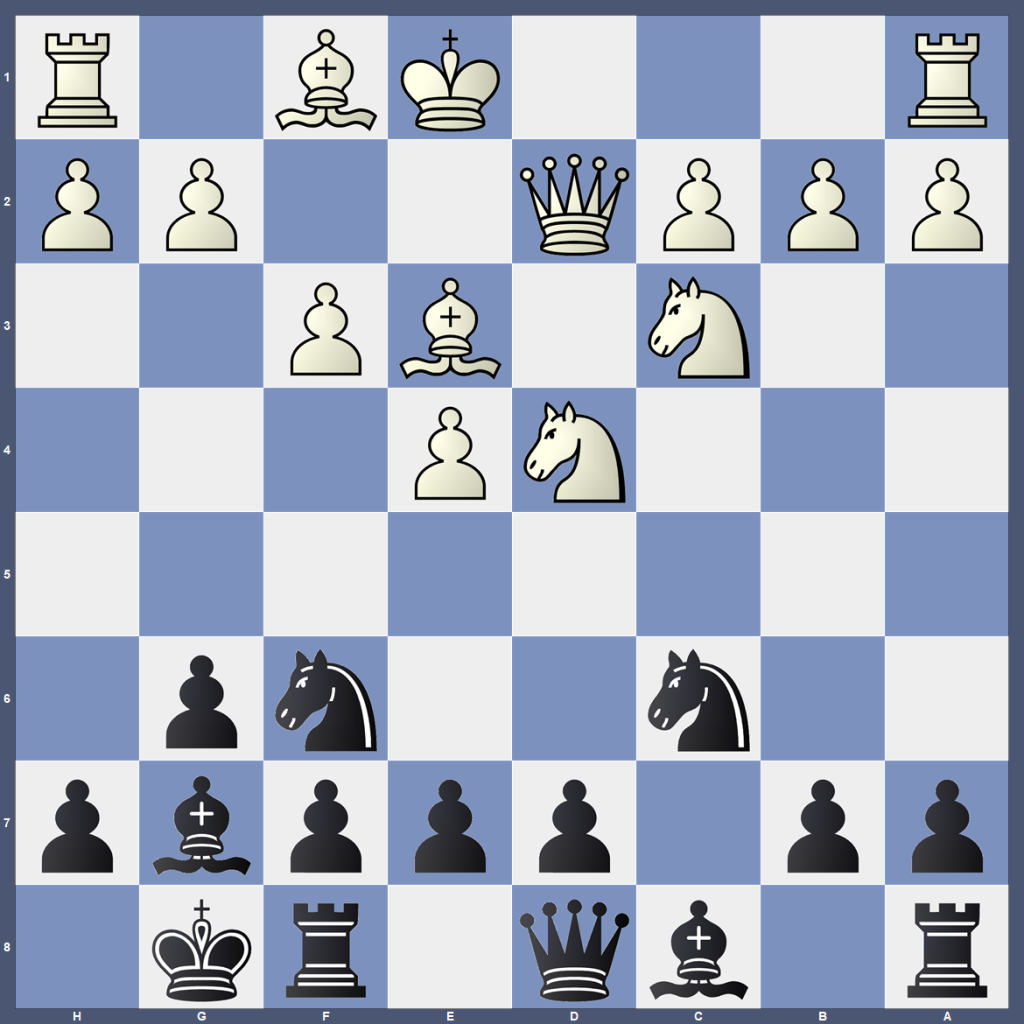
This is exactly what I was hoping for. In the Accelerated Dragon, this setup by White is not as dangerous as it is in the regular Dragon. The reason is simple: I have not committed to d6 yet, which means I can strike in the center with d5 immediately.
The Critical d5 Break in the Accelerated Dragon
One of the most important concepts in the Accelerated Dragon is the d5 break. Unlike the regular Dragon where Black plays d6 and then struggles to achieve d5, the Accelerated Dragon allows this liberating pawn push almost immediately.
8…d5!
This is main line theory, and it is the whole point of playing the Accelerated Dragon. Black strikes in the center and opens up the position before White can get his attack rolling on the kingside. The position is now dynamically equal, and White needs to make a decision about how to handle the central tension.
My opponent played:
9.exd5
This is considered slightly inaccurate. The more principled approach is 9.O-O-O, keeping the tension and maintaining central pressure. By capturing immediately, White releases the tension and gives me easy development.
9…Nxd5 10.Nxc6 bxc6
Now I have a semi-open b-file pointing at White’s queenside and a strong dark-squared bishop on g7. The Accelerated Dragon has served its purpose beautifully. I have reached a comfortable middlegame position against a much higher-rated player.
The Moment My Opponent Showed His Hand
Here is where things got interesting. My opponent played:
11.Bd4?!
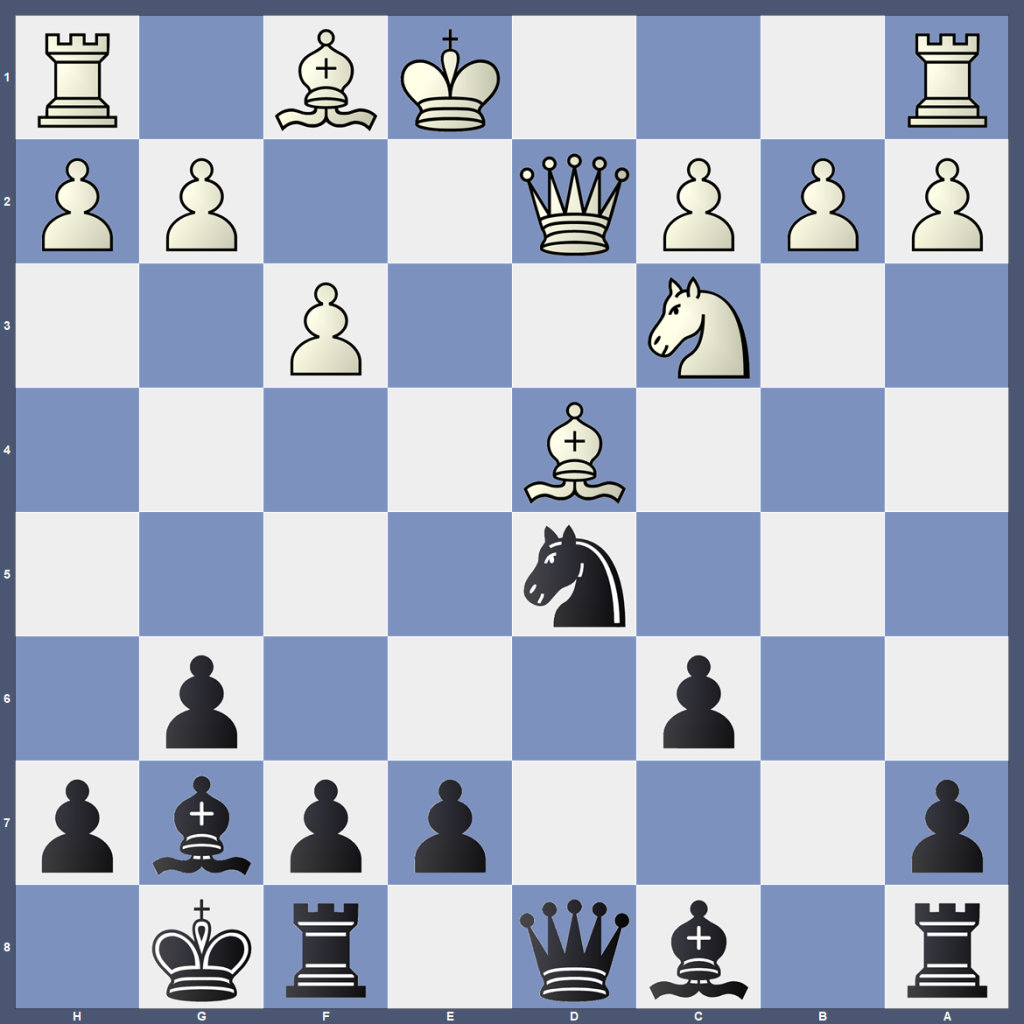
This move attempts to trade off my powerful dark-squared bishop, but it walks into a tactical problem. In the Accelerated Dragon, the dark-squared bishop is often Black’s best piece, and White frequently tries to eliminate it. However, the timing here is wrong.
11…e5!
This move stops any e4-e5 ideas from White and also chases the bishop from its attacking diagonal. My opponent clearly did not have a deep understanding of how the Accelerated Dragon is supposed to be played. A 2100 player should know better than to allow this kind of position, but here we are.
The bishop retreated:
12.Bc5 Re8
I played a simple, developing move, bringing my rook to the semi-open e-file. According to Stockfish, this is considered slightly passive, but in a practical game against a higher-rated opponent, I was thinking about solidity rather than the absolute best move.
The Exchange Sacrifice I Should Have Made
This brings me to one of the most important lessons from this game. After 12.Bc5, the computer screams that Black should play:
12…Rb8!?
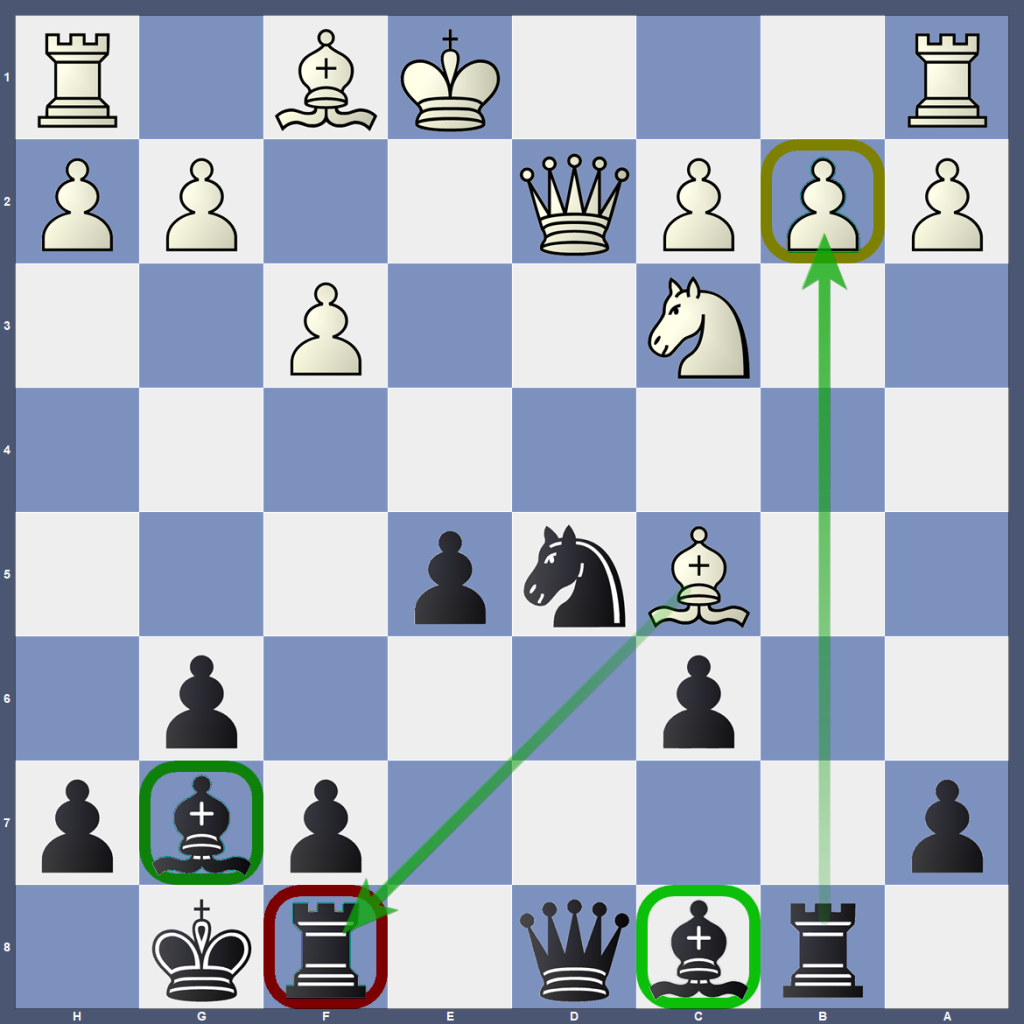
Wait, what? Sacrifice my rook for the bishop on f8?
Yes. The idea is that after 13.Bxf8, Black plays 13…Bxf8, and now all of Black’s pieces are incredibly active. The bishop pair is often worth more than a rook when the position is open and the opponent’s king is stuck in the center. White’s king has not castled, and Black’s pieces are ready to swarm.
This is the kind of exchange sacrifice that separates 1900 players from 2200 players. I saw the idea, but I was afraid of being down the exchange for the rest of the game. That fear cost me my best winning chances in the entire game.
The Accelerated Dragon often produces positions where dynamic compensation outweighs material considerations. If I want to reach 2200, I need to embrace these sacrifices rather than shy away from them.
The Middlegame Grind
After my more conservative choice with 12…Re8, the game settled into a roughly equal middlegame. The position after move 13 looked like this:
13.O-O-O Be6
I developed my bishop to e6, but this is considered passive by the engine. The more aggressive 13…Qa5, targeting the bishop on c5 and creating threats against White’s queenside, would have given me more active play. Again, I was playing too conservatively against a higher-rated opponent.
The game continued:
14.Nxd5 Bxd5 15.c4 Be6 16.Qxd8 Rexd8 17.Be2 Bh6+ 18.Kc2 Bf8 19.Bxf8 Kxf8
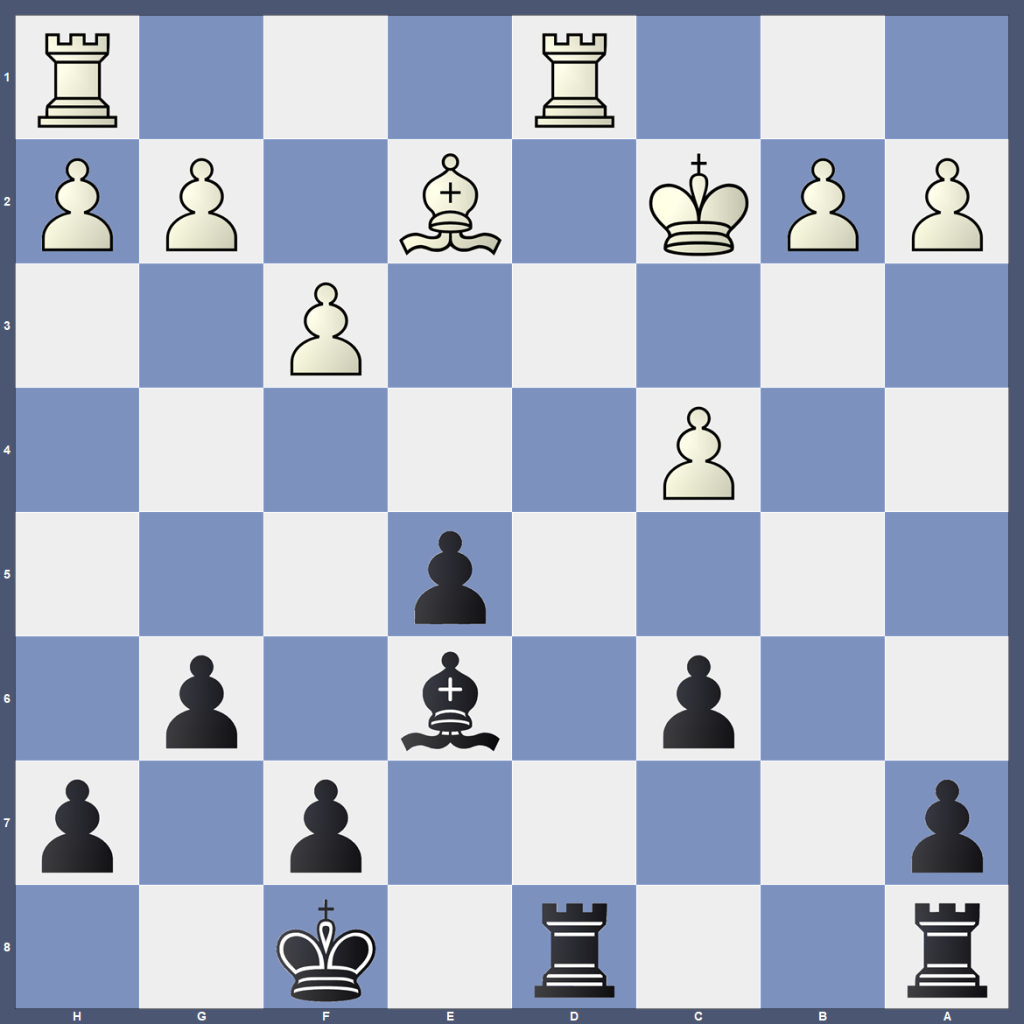
We have now entered an endgame. All the queens are off the board, and the pawn structure is symmetrical. With proper play from both sides, this position should be a dead draw.
Understanding Endgame Technique in Equal Positions
One of the things I have learned from playing the Accelerated Dragon is that many games enter drawish endgames where technique becomes paramount. This game was no exception.
After the queens came off, my opponent was clearly not happy. He was rated 300 points higher than me, and he wanted a win. I could see it in his body language. He kept playing, probing for weaknesses, trying to squeeze something out of a position that had nothing to squeeze.
20.Kc3 Ke7 21.b3 c5
I locked down the d4 square and made sure his king could not invade. The game was now a dead draw, and I knew it. My opponent knew it too, but he kept playing.
22.a3 a5 23.Rxd8 Rxd8 24.Rd1 Rb8 25.Rb1 Kd6
Move after move, we shuffled pieces around. I had offered a draw around move 30, but my opponent declined. He was determined to play this out to the bitter end, hoping I would blunder or lose on time or simply give up.
I did none of those things.
The Psychological Battle of Playing Higher-Rated Opponents
Here is something they do not teach you in chess books: playing against higher-rated opponents is as much a psychological battle as it is a chess battle.
When you sit down against someone rated 300 points higher, there is an unspoken expectation that you are going to lose. The higher-rated player expects to win. The tournament directors expect them to win. Sometimes even you expect to lose. This psychological pressure can cause you to make mistakes, to play too passively, to accept draws when you should be pressing.
In this game, I felt that pressure early. My conservative choice on move 12, playing Re8 instead of the exchange sacrifice Rb8, was partly influenced by fear of losing to a stronger player. But as the game progressed and the position simplified, I realized something important: this game was a draw. A stone-cold, ironclad draw. No amount of pressure from my opponent was going to change that.
So I dug in. I played accurate moves. I refused to be intimidated. And eventually, after 50 moves of grinding, my opponent finally accepted that he was not going to win this game.
26.g4 f5 27.gxf5 gxf5 28.Rg1 Rg8 29.Rxg8 Bxg8
The rooks came off, and now it was just kings, bishops, and pawns. The position was completely drawn.
30.Bd3 Be6 31.b4 axb4+ 32.axb4 cxb4+ 33.Kxb4 Bd7 34.c5+ Kd5 35.Bb5 Bc6 36.h4 e4 37.fxe4+ fxe4 38.Bxc6+ Kxc6 39.Kc4 e3 40.Kd3 e2 41.Kxe2 Kxc5
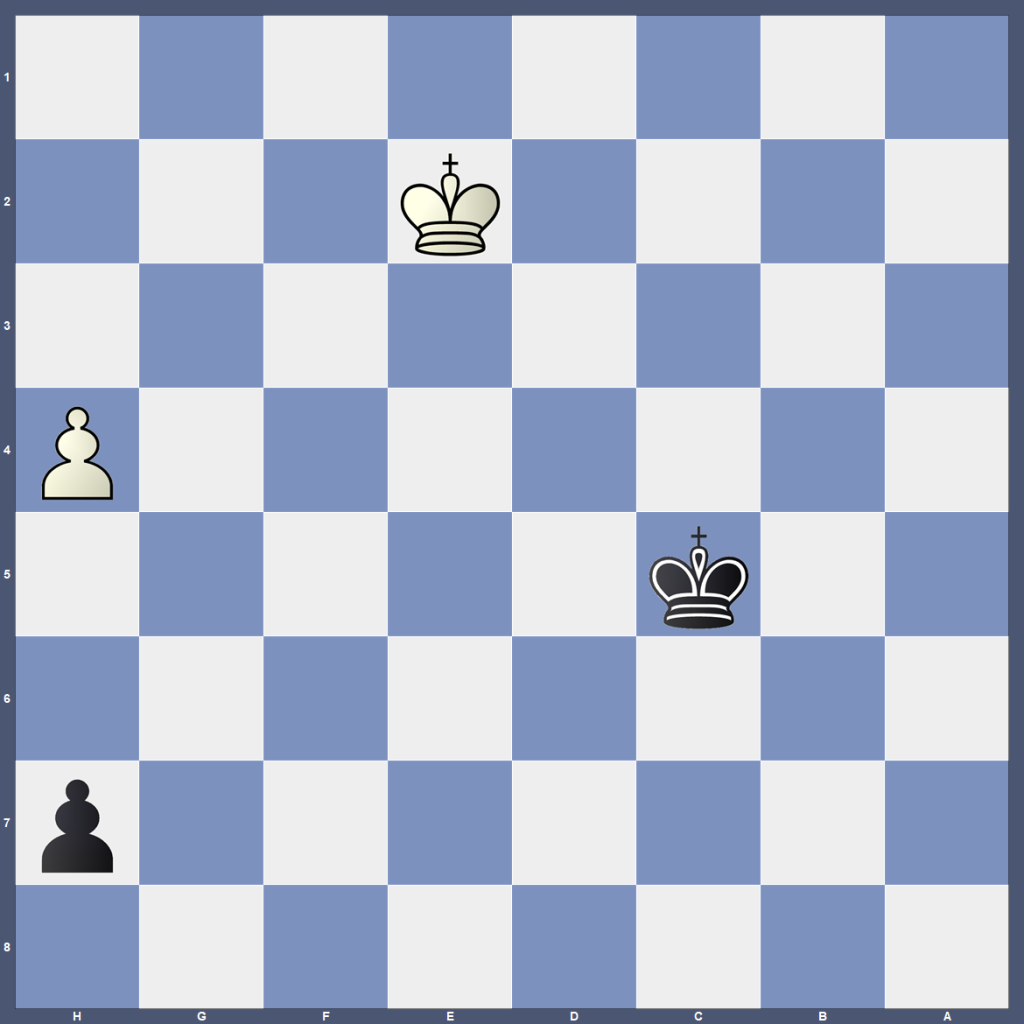
The final position was a king and pawn endgame with no winning chances for either side.
42.Kf3 Kd6 43.Kf4 Ke6 44.Kg5 Kf7 45.h5 Kg7 46.Kf5 Kf7 47.Kg4 Kf6 48.Kf4 h6 49.Kg4 Ke5 50.Kg3 Kf5
My opponent finally offered a draw, and I accepted. Half a point against a 2159-rated player. I will take it.
Key Takeaways From This Accelerated Dragon Battle
Every game teaches us something, and this one taught me several important lessons that I want to share with fellow improving players.
Takeaway 1: Trust Your Opening Preparation
When you play the Accelerated Dragon or any sharp opening, you will occasionally face opponents who do not know the theory as well as you do. My opponent played Bd4 on move 11, which is not a theoretically sound move in this position. By knowing my Accelerated Dragon theory better than he did, I was able to equalize easily and take away his advantage as White.
The lesson here is simple: if you are going to play a theoretical opening like the Accelerated Dragon, invest the time to learn it properly. Your preparation will pay dividends against stronger opponents who underestimate you.
For a deeper dive into the Accelerated Dragon and its ideas, I recommend checking out Chess Pathways’ comprehensive guide to the Accelerated Dragon, which covers the typical plans for both sides.
Takeaway 2: Do Not Fear Dynamic Compensation
The exchange sacrifice on move 12 that I avoided would have given me serious winning chances. In the Accelerated Dragon, the dark-squared bishop and the bishop pair in general can be worth more than a rook in open positions with active play.
As I wrote about in a previous post on tactical combinations in the Sicilian Dragon, material sacrifices can be justified when they lead to concrete threats against the opponent’s king. The knight sacrifice in that game, like the exchange sacrifice I should have played in this one, demonstrates that chess is not just about counting material. It is about evaluating the activity and coordination of your pieces.
If I want to reach 2200, I need to embrace these dynamic opportunities rather than retreat into passive safety.
Takeaway 3: Endgame Technique Matters
When the queens came off and we entered the endgame, my opponent tried everything to create winning chances. He probed, he pushed, he refused my draw offer. But because I knew the endgame was drawn and I played accurately, he could not break through.
Jeremy Silman, in his book How to Reassess Your Chess, emphasizes that understanding imbalances and knowing when a position is objectively drawn is crucial for practical play. In this game, I recognized that the symmetrical pawn structure and simplified material gave neither side any winning chances. That knowledge gave me the confidence to hold my ground.
What This Game Means for My Chess Journey
As a player rated around 1900 working toward 2200, every game against a stronger opponent is a learning opportunity. This game showed me that I can compete with players rated in the 2100s. My Accelerated Dragon preparation is solid, my endgame technique is adequate for holding drawn positions, and my psychological resilience is improving.
But the game also showed me where I need to improve. The exchange sacrifice I avoided on move 12 represents a gap in my understanding of dynamic compensation. I was too conservative, too afraid of the material imbalance. A 2200 player would have trusted the position and gone for it.
That is the difference between where I am and where I want to be. And now I know what to work on.
Why Higher-Rated Players Sometimes Struggle Against the Accelerated Dragon
One observation from this game and others I have played: higher-rated players who primarily face the regular Sicilian Dragon sometimes underestimate the Accelerated Dragon. They know the Yugoslav Attack cold, they have memorized 20 moves of theory in the main lines, but when you spring the Accelerated Dragon on them, they are forced to think from move 5 onwards.
My opponent’s decision to play Bd4 on move 11 was a perfect example of this phenomenon. It is a natural-looking move that would be fine in many positions, but in the Accelerated Dragon structure, it walks into e5 and gives Black exactly what they want. A player who understood the specific nuances of the Accelerated Dragon would never have allowed this.
This is why opening preparation matters so much for improving players. You do not need to memorize 30 moves of theory. You need to understand the key ideas, the typical piece placements, and the critical pawn breaks. When your opponent deviates from the main lines, your understanding will guide you to the right moves.
The Importance of Patience in Equal Positions
Another lesson from this game worth highlighting is the importance of patience. After the queens came off, my opponent spent nearly 30 more moves trying to create winning chances in a position that was objectively drawn. He pushed, he probed, he tried everything he could think of to unbalance the position.
I responded with patience. I did not try to win a drawn position. I did not make unnecessary pawn moves that would weaken my structure. I simply held my ground, made solid moves, and waited for him to either accept the draw or make a mistake.
This kind of patience is difficult to develop. As improving players, we want to win every game. We want to find the brilliant move, the tactical shot, the crushing combination. But sometimes the right approach is to recognize that the position is drawn and play accordingly.
In the Accelerated Dragon, this happens more often than you might think. The opening leads to balanced middlegames where neither side has a clear advantage. Knowing when to push for a win and when to settle for a draw is a crucial skill for tournament play.
Final Thoughts on Playing the Accelerated Dragon
The Accelerated Dragon remains one of my favorite openings for good reason. It gives Black active piece play, avoids the most dangerous attacking lines, and leads to positions where understanding trumps memorization. Against my 2159-rated opponent, the opening served me well, giving me equality out of the opening and a position I could hold to the end.
If you are an amateur player looking for a solid, fighting opening against 1.e4, I highly recommend studying the Accelerated Dragon. Yes, you need to know some theory. Yes, you need to understand the key ideas like the d5 break and the importance of the dark-squared bishop. But once you have that foundation, the opening rewards understanding over rote memorization.
The Accelerated Dragon has been played at the highest levels by world champions and grandmasters alike. Magnus Carlsen, Garry Kasparov, and Maxime Vachier-Lagrave have all employed it successfully. If it is good enough for them, it is certainly good enough for us improving amateurs.
And when you sit down against a player rated 300 points higher than you, that understanding might just be enough to earn you half a point. Sometimes that half point makes all the difference in the final standings.
The chess journey continues. See you next round…
Have you played the Accelerated Dragon in your own games? What has been your experience against higher-rated opponents? Drop a comment below and share your stories. And if you found this analysis helpful, consider checking out my other posts on navigating the Sicilian Defense as an improving player.