King’s Indian Attack: 5 Crucial Lessons From My 2026 Senior Open Battle

King's Indian Attack

2026 Washington Senior Chess Championship – ROUND 3

The King’s Indian Attack has been my faithful companion against the French Defense for years now, and Round 3 of the 2026 Washington Senior Open gave me another chance to put it through its paces. My opponent, Richard LaVoice, is the kind of player who finds the initiative in positions where most of us are still trying to figure out where to put our pieces. He had beaten me a couple of years back at the Carol Kleist Memorial side event of the Washington Open, and the sting of that loss was still parked somewhere in my memory bank, charging me late fees.

This time I had White. And I had the King’s Indian Attack. Whether that was enough? Let’s find out together.

Why I Trust the King’s Indian Attack Against the French

Before diving into the game, a quick word about why the King’s Indian Attack keeps showing up on my scoresheets. The French Defense is a beast of solidity, and trying to outprep heavy French specialists in mainline theory is a fool’s errand for a club player. The King’s Indian Attack flips the script entirely. I get to play my preferred structure, sidestep the endless variations of the Winawer and Tarrasch, and steer the game into King’s Indian Attack waters where strategic understanding outweighs memorization.

That said, I want to dispel a myth right away: the King’s Indian Attack is not a “system” you can play on autopilot. Anyone who tells you that is selling something. Position by position, this opening demands real calculation, especially when Black plays for a closed center with an early …e5, like Richard did.

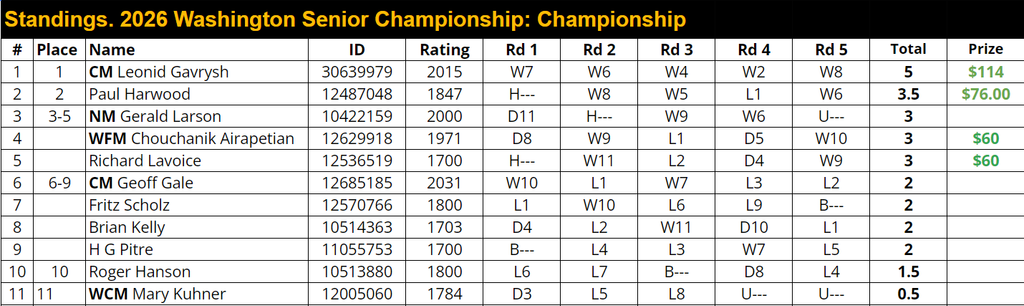
After a buy in Round 1 and a win in Round 2, I came into this game at 1.5/2 with momentum on my side and a sharpened pencil. Richard is rated around 1700 these days, but anyone who’s played him knows the rating undersells him. He recently dropped from the high 1800s and still plays like it.

The Opening Phase: Building a Familiar King’s Indian Attack Structure

The first ten moves were standard issue. e4 e6, then d3 c5, Nf3 Nc6, g3 Nge7, Bg2 g6, O-O Bg7. By move six I had my bishop fianchettoed on g2, my king tucked safely behind it, and Richard had built a respectable little fortress on the kingside with his own bishop on g7. Twin fianchettos, mutual respect, no eye contact.

King's Indian Attack: 5 Crucial Lessons From My 2026 Senior Open Battle

On move 7 he chose …e5, locking the central tension and signaling that this was going to be a slow, cramped, strategic affair. Fine by me. The King’s Indian Attack thrives in exactly these positions. I get to maneuver slowly, generate kingside play with the eventual f4 break, and probe the queenside with a4 and the b4 break.

The move 10. a4 was about exactly that: gaining queenside space and discouraging Black’s …a6 and …b5 expansion. Nothing flashy, just sensible chess.

Move 11. Nf1 turned out to be a novelty according to the database, which I learned afterward. I didn’t know that at the time. I just knew the f1-e3-d5 knight tour is a standard King’s Indian Attack regrouping idea, and it works beautifully when d5 might become available.

The First Hiccup: A Move No Engine Will Ever Like

By move 12 my knight was sitting on e3 and Richard had developed his bishop to h3, offering a trade. The natural response is to take. Pretty much any engine you fire up will tell you the same thing.

I played 13. Bh1.

King's Indian Attack: 5 Crucial Lessons From My 2026 Senior Open Battle
The position after 13..Bh1?

That’s two question marks worth of pain. I’m not going to dress this up. There is no chess engine on earth that approves of this move. If you ran it through Stockfish, Komodo, and Leela simultaneously, they would form a brief alliance just long enough to roll their eyes at me and then go back to disagreeing about everything else.

The correct move was 13. Bxh3, after which I could have followed up with b4 and gotten a small but real advantage. Instead, I retreated my best piece to its starting square because… well, I’m still not sure why. Sometimes the brain just goes on vacation without telling you.

Here’s the first lesson from the King’s Indian Attack: trust your good bishops. They are not endangered ornaments. Trade them when the trade is good for you. I forgot that for one move and gave up a meaningful edge.

The Critical King’s Indian Attack Calculation Moment

After my Bh1 lapse, Richard played sensibly with 13…h6, and I gained more space with 14. a5. The position rebalanced. Then came the key sequence:

14…Kh7, 15. Nd2 f5, 16. exf5 gxf5.

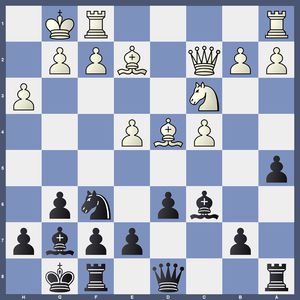
Now Richard had a pawn on f5 and was looking to throw his kingside at me. I responded with 17. Qh5, a move I’m proud of. It announced loudly and clearly that I intended to play for a win, and it kept latent threats hanging in the air like cigar smoke at a tournament hall.

Richard played 17…f4, attacking my e3 knight and reaching what I now consider the most critical moment of the entire game.

King's Indian Attack: 5 Crucial Lessons From My 2026 Senior Open Battle
The critical position. Only Ne4 or Nf3 keeps things equal.

This is where I want to slow down, because this is the heart of what amateur players need to understand about the King’s Indian Attack and dynamic chess in general.

Pattern Recognition: The Move I Should Have Seen

The right move was 18. Nf3.

The idea is beautiful once you see it. The knight heads for g5 with discovered attack possibilities. If Black grabs my e3 knight with 18…fxe3, I respond 19. Ng5+ Kg8, and now 20. Nxh3, scooping up the bishop that landed there on move 12. The follow-up is overwhelming, and White is winning material with a continuing attack.

I saw the idea. I had it on my mental board. Then I made a calculation error that I want every developing player to internalize. I convinced myself that after Nxh3, Black plays …exf2+ and wins my rook on e1.

Look at the position. Look carefully. The knight on h3 covers f2. The pawn on f2 is doing the attacking, not getting attacked. The line is just winning for White.

This is the second King’s Indian Attack lesson, and it’s a brutal one: even when you see the right idea, your calculation can sabotage you. The cure isn’t memorizing more theory. The cure is what Jeremy Silman talks about in How to Reassess Your Chess – slowing down and re-verifying the position at each step. I rushed. I paid for it.

I played 18. Be4+ instead. It earned a question mark, and rightly so.

How the King’s Indian Attack Survives My Mistakes

Richard played 18…Kh8, and I tried to reorganize with 19. Nd5 Nxd5, 20. Bxd5, hoping to keep some pressure.

Then he played 20…Ne7, which the engine also dings with a question mark. The right move was 20…Bg4, with a continuing attack on my queen. After that, Black would have stood clearly better. But chess is hard, and Richard didn’t find the strongest idea either. Two ships passing in the night, both leaking.

King's Indian Attack: 5 Crucial Lessons From My 2026 Senior Open Battle
After 21 Bf3, White is slowly getting back into the game.

I played 21. Bf3, stopping the Bg4 idea and preparing the dangerous a6 push.

Then came the moment that flipped the game.

The Blunder I Was Ready to Punish

Richard played 21…Rab8.

That’s the only move in the game flagged as a full-blown blunder by the annotations, and it gave me exactly the green light I needed.

I played 22. g4.

King's Indian Attack: 5 Crucial Lessons From My 2026 Senior Open Battle
After 22. g4, White wins a piece.

This is the kind of move that makes the King’s Indian Attack so much fun. By advancing the g-pawn, I trapped the h3 bishop. Black has no good retreat. The bishop has to take on g4, and after I recapture, I’ve won a piece with a continuing initiative.

Here’s the third key idea I want you to absorb: when your opponent makes a strange move, stop and ask why. What did that move not defend? What did it weaken? In Richard’s case, 21…Rab8 abandoned a key piece of coordination and let the g4 trap come crashing down. If you train your eye to notice these moments, your rating will thank you.

After 22…Bxg4, 23. Bxg4 Qb5, I had won a piece and was in firmly winning territory.

The Long Conversion: Where I Missed More Than Once

Now, you’d think the rest would be smooth sailing. It was not.

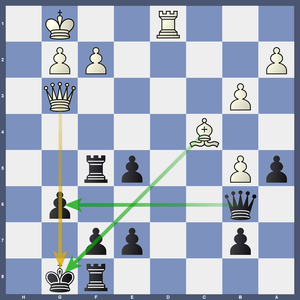
On move 28 I had a tactical shot with 28. Nxe5 that I considered and then dismissed. I was worried I was missing something. Turns out I was missing exactly nothing. The tactic just wins on the spot. I played the safer 28. Bf5+ instead, which keeps the advantage but doesn’t end the game.

King's Indian Attack: 5 Crucial Lessons From My 2026 Senior Open Battle
I considered and rejected 39. Nxe5!! which wins instantly

On move 31 I had 31. Bxf4 available, which the engine confirms is the strongest move, with the idea of doubling rooks on the seventh rank and crashing through. I’d actually seen the idea during the game. I played the more pedestrian 31. Be4 instead, allowing Black to trade off the strong knight.

And then, on move 39, came the move I will always remember as the one that got away: 39. Nxe5.

Two exclamation marks. A genuine brilliancy by the annotation system, and almost impossible to find at the board. The knight is hanging to multiple pieces. The queen sits behind it doing nothing obvious. But the threats are devastating. The king is exposed, the back rank is weak, and the tactical complications all work for White. After Black’s best try, the king gets hunted down across the entire board.

I played 39. Qf3 instead. Still winning, just not winning quickly.

Three missed tactical shots in one game. Three. If I had played even one of them cleanly, the game ends earlier. The fact that I converted anyway was due to Richard cracking with 40…Qxh2, allowing 41. Rh1, and he resigned. Rich is a fighter and didn’t give up easily, which I respected the whole way through.

Five Crucial Lessons From This King’s Indian Attack Win

Let me distill this into something practical.

Lesson 1: Trust your good bishops

When you have a King’s Indian Attack structure with a fianchettoed bishop on g2, that bishop is your best friend in the closed positions that arise. Trading it for an enemy bishop that’s been hanging around your kingside is almost always correct when the trade is offered. My 13. Bh1 was a textbook example of overprotecting a piece that didn’t need protecting.

Lesson 2: Calculate twice, move once

I saw the right idea with 18. Nf3 and then talked myself out of it because of a phantom threat that didn’t exist. This is endemic at the club level. We see the candidate move, we start calculating, we hit a perceived problem, and we abandon ship without verifying that the problem is real. Yasser Seirawan’s Winning Chess Brilliancies is full of examples where masters double-checked their calculations and found the win. We should do the same.

Lesson 3: Watch for sudden weaknesses

The g4 idea on move 22 only worked because Richard’s 21…Rab8 disrupted his own coordination. When your opponent makes a move that seems aimless or off-purpose, that’s your cue to scan for tactical opportunities. Most amateur games are decided by exactly these moments.

Lesson 4: Don’t trust your fear over your calculation

On move 28, I had Nxe5 sitting right there. I felt nervous, so I played a safer move. Feelings are not analysis. The right way to handle this in the future is to commit to either calculating to the end or playing the move and trusting your work. Hedging in between is how you turn winning positions into long, anxious slogs.

Lesson 5: Brilliancies are bonus points, not requirements

Missing 39. Nxe5 stung. But the game was already winning. The win lives in the King’s Indian Attack ideas that set up the position, the g4 breakthrough that won the piece, and the slow accumulation of advantages afterward. Brilliancies are wonderful when they come. Don’t punish yourself for missing them when the position is already in your favor.

The Practical Side of the King’s Indian Attack

Beyond the specific tactics, this game reinforced why I keep recommending the King’s Indian Attack to my readers at the club level. The opening gives you a flexible structure that works against the French, certain Sicilians, and even some Caro-Kann setups. It allows you to play strategic chess against players who would otherwise outprep you in mainline theory. It creates rich middlegame positions with both attacking and positional ideas. And it forgives mistakes – somewhat – because the king is so well protected behind the fianchetto.

If you’re looking for a deeper dive into how the King’s Indian Attack handles different setups, the overview at Chess Strategy Online gives a solid introduction to the core ideas.

For more on how solid endgame technique can save games where you’ve squandered an opening advantage, I’ve written about this before on my recommended endgame books page at betterchess.net. The connection isn’t accidental. Opening understanding only matters if you can convert the resulting positions, and the King’s Indian Attack rewards players who study both ends of the game.

What I Took Home From Round 3

After the game ended and I walked out to grab some water, I sat with the result for a minute. A win, yes. A clean win? Not even close. I had been handed multiple chances to finish things off and I had let them slide. The King’s Indian Attack had worked. I had been the weak link.

That, I think, is actually the most important lesson of all. Chess at the 1900 to 2200 transition isn’t about playing perfect games. Those don’t exist. It’s about playing slightly better than your opponent, slightly more often, and grinding out the points when the position allows. Richard outplayed me in certain phases. I outplayed him in others. The scoreboard reflected who held things together longer.

Three Key Takeaways

If you remember nothing else from this post, take these three with you.

Takeaway 1: When you see a strong candidate move, verify it twice. Don’t talk yourself out of good moves because of imagined threats. Recalculate. Confirm. Then play it. The 18. Nf3 line in this game would have ended things twenty moves earlier. The fix is process discipline, and Silman’s How to Reassess Your Chess is one of the best resources for building that habit.

Takeaway 2: Build a pattern library of trap motifs. The g4 trap that won me a piece is a recurring motif in any opening where a bishop ventures to h3 or h6 without an escape square. The more of these patterns you internalize, the more often you’ll spot them in your own games. Working through annotated brilliancies, like those collected in Seirawan’s Winning Chess Brilliancies, is one of the most efficient ways I know to stockpile these ideas.

Takeaway 3: Convert first, criticize later. I missed at least three winning combinations in this game. None of them mattered because I kept playing reasonable moves and let my opponent eventually crack. Perfectionism is the enemy of the result. Get the point, then study the missed shots afterward. Tactics trainers like Chess Tempo or the Chess.com puzzle rush are perfect for cleaning up the pattern recognition gaps that cost you the brilliancies.

Wrapping Up the King’s Indian Attack Story

Going 2/2 in this tournament with a buy in Round 1 puts me in a solid spot heading into the next rounds. The King’s Indian Attack remains my reliable weapon against 1…e6, and games like this one – messy, imperfect, ultimately successful – are exactly the kind that build long-term strength.

If you’re a developing player looking for an opening that combines strategic depth with practical reliability, the King’s Indian Attack deserves a serious look. Just remember to calculate carefully when the position turns tactical. The opening will reward you, but only if you do your part.

Now if you’ll excuse me, I have some calculation exercises to run. There’s no excuse for missing Nf3 next time. The board doesn’t grade on effort, but my future opponents won’t either.


Suggested image generation prompt: A dramatic close-up of a wooden tournament chess board mid-game, showing a King’s Indian Attack pawn structure with white pawns on d3, e4, g3 and a fianchettoed bishop on g2. A black bishop sits exposed on h3 with a white pawn poised on g4. Warm tournament hall lighting, slightly out-of-focus chess clock in the background, shallow depth of field. Cinematic, realistic photography style with rich brown and amber tones suggesting tension and decisive action.