

8/24/2026 – Opening Encyclopaedia 2026 presents you with a wealth of new ideas for your opening repertoire. From May 2025 to March 2026 62 new repertoire suggestions and 46 new videos have been added to the Opening Encyclopaedia 2026! In total, you have access to 1586 opening articles, 100 videos and 8274 surveys covering a period of over 26 years!
Review by Nagesh Havanur
If you are an aspiring tournament player, you are first intimidated and then overwhelmed by the sheer volume of material offered by the Opening Encyclopaedia. Would one be able to go through even a tiny fraction of the commentary and analysis that is presented in this work? The answer to that diffident question is yes. You can. You need to know what you looking for and how much you need for your tournament preparation.
For starters, I shall deal with the treatment of open games starting with 1.e4 e5. If you are a talented young player or a club level player, first learn lines with direct piece play. This was how the great masters played.
The Two Knights Defence
You would still find it in classical lines of the Two Knights Defence. In this Opening Encyclopaedia 2026, they are analysed by Renato Quintiliano and Leonid Kritz among others. A case in point is the following variation:
1.e4 e5 2.Nf3 Nc6 3.Bc4 Nf6 4.Ng5 d5 5.exd5 Na5 6.Bb5+ c6 7.dxc6 bxc6 8.Be2 h6 9.Nf3 e4 10.Ne5
Now Black has 10…Bd6, 10…Qd4 and 10…Bc5.
10…Bd6 is no longer in favour as it allows the White to develop on c3. 10… Qd4 prevents White from castling and forces the king to remain the centre. I have some reservations on this line as it is not so easy to open lines against the White king. So I find 10…Bc5 preferable. By way of update, I may add, currently Black delays the deployment of the queen for attack with…Qc7 and so on. In stead he castles first and brings the rook to e8. Thus he is able to exploit the awkward placement of the White pieces on d3 and e2 to follow up with serious threats. White has to defend carefully to maintain a playable position.
Meanwhile I draw your attention to two offbeat lines that Oliver Reech highlighted in a recent ChessBase article (see the link below this review). It features a curious miniature that young Bobby Fischer lost in a simultaneous display.
Arguably, these lines are not 100 % sound. They have a surprise value.
The Petroff Defence
Among other surveys I would single out the survey on the 3…Nxe4 line in the Petroff Defence by Balász Csonka. His analysis is vindicated by a recent correspondence game:
How to meet the Spanish and slower lines with d3
Now let us move forward to the treatment of the Spanish in this Encyclopaedia. As Kasparov once pointed out, understanding the Spanish is an education in itself even if you are not going to play every single line in your life. Among the Main Systems there are the Keres, Smyslov, Breyer and Zaitsev Variations. There is a fine introduction to their current status in the Opening Tutorial here. Not to be missed by young or club level players. Many of the surveys in these classical systems date back to the years before 2020. Here the ideas are more important than variations.
If you look at grandmaster practice today, it’s full of positional lines with a slow buildup. Lines starting with 1.e4 e5 2.Nf3 Nc6 3.Bc4 Nf6 or 3.Bg5 Nf6 often continue with 4.d3. Here the Ruy Lopez and Giuoco Piano meet. It’s a trend set by Carlsen and his peers over years. If you are Black, you can counter this with an unusual defence and go for a breakthrough later.
The plan was first developed by the Russian GM, Maksim Chigaev

Photo: Alina l’Ami (Archive)
It’s explained by Alexei Kuzmin in this Encyclopaedia. Black counters White’s move d3 with a move that mirrors his own…d6. He follows it up with…Be7, 0-0, Re8 and Bf8 regrouping his pieces. On the queenside he allows himself only one move …a6 forcing the Spanish bishop to retreat to a4. But he does not follow it up with …b5 and a subsequent…Bb7. Instead he plays …Bg4, pinning the knight on f3. If White anticipates the move and plays h3, black brings the bishop to e6. Alexei Kuzmin calls it “a universal plan” for Black and it’s simplicity itself. However, he has to play actively thereafter. If not, White would have initiative and advance his forces. Here is a fascinating struggle:
Note that older systems like the Chigorin, the Smyslov and the Breyer Variations do not have recent updates in this Encyclopaedia. They have been extensively played and analysed for decades. So they are not in vogue in grandmaster practice. However, this state of affairs could change any time. Ideally speaking, I would like to see an analysis of the Chigorin Main Line (C97-C99) in this Encyclopaedia. It requires subtle and nuanced understanding. If White’s play is a little complacent and passive, Black takes the initiative and wins as shown in the following game:
The King’s Gambit
Last but least, there are seven surveys on the King’s Gambit from the years 2013-2023. Here one would want a little more. In 2020 ChessBase produced a string of DVDs on the King’s Gambit, Power Play 27 and 28 – The King’s Gambit and Tactic Toolbox. The main analysis in this DVD set is yet to be included in the Encyclopaedia here.
How should players with Black deal with the King’s Gambit? They can accept the gambit pawn and be prepared for a tactical slugfest. If not, they can go for the Falkbeer Counter Gambit. Here I propose a line invented by Aron Nimzowitsch.
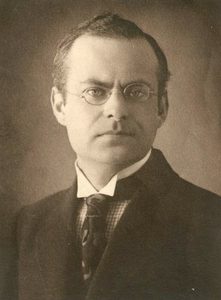
Photo: Aron Nimzowitsch | Photo: Unknown via Per Skjoldager, Lund Chess Academy: https://www.chesslund.com/
The following illustration shows the pitfalls for White if he is not careful.
Books and Databases
This brings me to the general question: How should one go about learning opening theory? Have databases aided by engines replaced books altogether? Not really. Today books and computers complement each other. So learn from both. There is no lack of books on the open games. I have offered a short list below this review. It’s also interesting to see how opening theory has evolved.
In this context I shall mention an old classic, How to Open a Chess Game (RHM Press 1974).
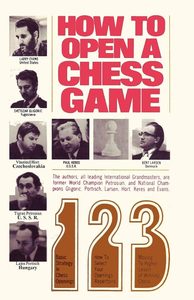
In this book each grandmaster draws from his own life experience and explains how to play an opening. One should read such books not to copy or follow a particular player, but to draw inspiration from each of them and develop a repertoire according to one’s own temperament and style.
Choosing an opening repertoire
Whenever you are interested in a particular opening in this Encyclopaedia, ask yourself two questions:
Is it being played today? If so, do you have to add recent games from the MegaBase?
If it is no longer played, is it because it has received too much attention or is it because it has been abandoned on account of an adverse result?
If you like a particular system and analysis here, do check out MegaBase and a good Corr.Base and see if you can update the line and play it yourself. Sometimes a particular line goes into oblivion on account of an undeserved defeat with poor play in the middlegame. Or it is considered too old-fashioned. In that case you can revive the line yourself.
Prepare well and play well.
In the next part of the Review I shall deal with the treatment of the Semi-Open Games in this Encyclopaedia. Watch this space.
Links:
https://en.chessbase.com/post/opening-encyclopaedia-2024-review-nagesh-havanur
https://en.chessbase.com/post/opening-encyclopaedia-review-nagesh-havanur-p1
https://shop.chessbase.com/en/openings/kings_gambit
https://en.chessbase.com/post/Fischers-Fritz-flop-31e
https://en.chessbase.com/post/new-opening-encyclopaedia-2026
https://shop.chessbase.com/en/products/martin_evans_and_friends_vol_1_and_2
Further Reading
1)How to Open a Chess Game (RHM Press. 1974)
2)Chess Opening Essentials Vol. 1 The Complete 1.e4 (New in Chess. 2007)
3)Mastering the Chess Openings Vols. 1-4 by John Watson (Gambit Publications. 2006-2010)
4) A Disreputable Opening Repertoire by Jonathan Tait (Everyman Chess. 2022)
5) Coffeehouse Repertoire 1.e4 Vol. 1 & 2 by Gawain Jones (Quality Chess. 2021)
6)The Zaitsev System by Alexey Kuzmin (New in Chess. 2016)
7)The Chigorin Bible: A Classic Defence to the Ruy Lopez by Ivan Sokolov and Ivan Salgado Lopez (Thinkers Publishing. 2018)
8)The King’s Gambit by John Shaw (Quality Chess. 2013)